
Interoception: Your Body’s “Sixth Sense” — and Why Deep Rest Helps Restore It
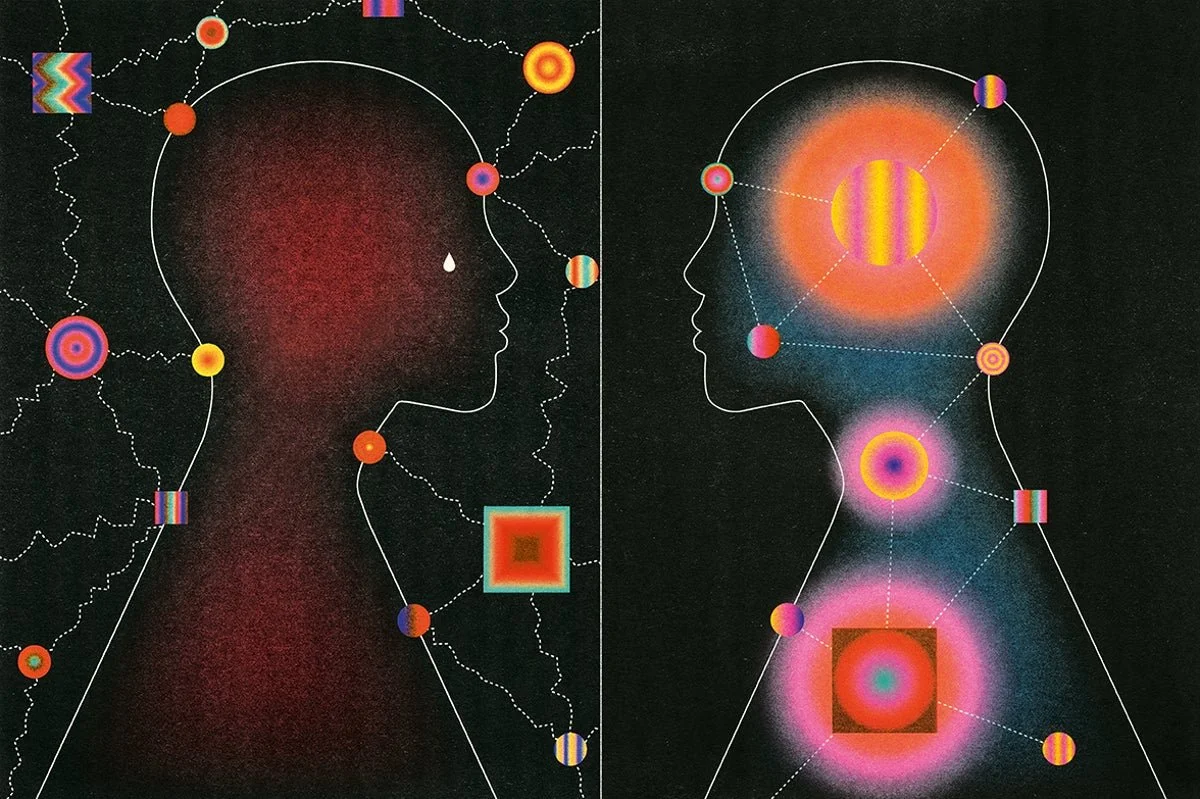
Most of us are fluent in the five senses: sight, sound, touch, taste, and smell. But there’s another sense quietly shaping our mental and emotional health — one that many of us have lost touch with.
It’s called interoception.
Researchers are increasingly describing interoception as the body’s “sixth sense”: the ability to perceive internal signals like heartbeat, breath, hunger, tension, temperature, and emotional states. According to a recent article in Scientific American, this inner awareness plays a critical role in mental health, emotional regulation, and resilience.
When interoception is strong, we’re better able to recognize stress early, regulate our emotions, and respond to our needs. When it’s disrupted, people are more likely to experience anxiety, depression, chronic stress, and burnout.
In other words: how well we can feel ourselves from the inside matters deeply.
Why modern life dulls our inner awareness
Modern life is incredibly loud — not just audibly, but cognitively.
Screens, notifications, deadlines, traffic, and constant decision-making keep our attention pointed outward. Over time, this external focus can overwhelm the nervous system and drown out subtle internal signals.
Many people don’t notice hunger until they’re exhausted, tension until it becomes pain, or stress until it spills over. This isn’t a personal failure — it’s a predictable response to an environment that rarely allows true rest.
Interoception doesn’t disappear, but it does get quieter when the nervous system is stuck in a state of chronic alertness.
The role of deep rest in restoring interoception
One of the key insights from interoception research is that awareness returns when the nervous system feels safe enough to listen.
This is where deep rest matters.
When external input decreases — noise, light, gravity, social demands — the brain has more capacity to register internal sensations. Heartbeat becomes noticeable. Breath slows. Muscle tension reveals itself. Thoughts settle.
Practices like meditation, breathwork, and somatic therapies are often used to strengthen interoception, but they can be challenging for people who are already overwhelmed or new to mindfulness.
That’s why environments that remove effort can be so powerful.
How floating supports interoceptive awareness
Float therapy creates a rare set of conditions: warmth, buoyancy, quiet, and minimal sensory input. The body floats effortlessly in skin-temperature water, and the external world fades into the background.
What remains is internal experience.
People often report becoming more aware of their breath, heartbeat, emotional state, or patterns of tension — not because they’re trying to, but because there’s finally space to notice. For many, this feels like a reconnection to something familiar but long ignored.
Floating doesn’t force awareness. It allows it.
This aligns closely with what interoception researchers are pointing toward: healing and regulation don’t come from pushing harder, but from creating the right conditions for the nervous system to recalibrate.
Not about fixing — about listening
One important note: interoception isn’t about controlling the body or “optimizing” yourself.
It’s about listening.
Stronger interoceptive awareness helps people recognize when they need rest, movement, connection, or boundaries. It supports emotional intelligence and self-trust. And over time, it can shift the relationship people have with stress, anxiety, and overwhelm.
Floating is one of many ways people explore this inner sense — not as a cure-all, but as a practice of returning attention inward in a world that constantly pulls it away.
A quiet reset for a noisy world
As the Scientific American article suggests, interoception may be a key missing piece in our understanding of mental health and well-being. Strengthening this “sixth sense” doesn’t require doing more — it often requires doing less.
Less noise.
Less pressure.
Less effort.
Sometimes the most meaningful reset happens not by adding something new, but by giving the body permission to feel what’s already there.